The 5pm Club: A Month in the Library’s Last Hour
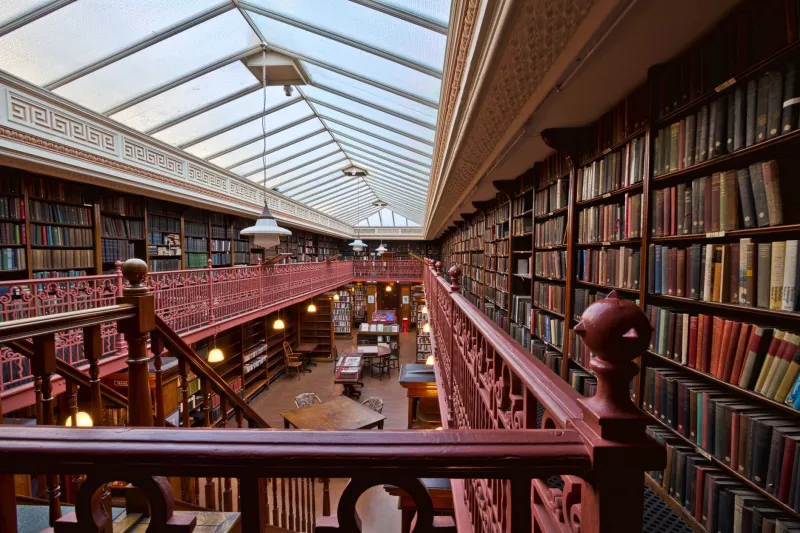
I have a new ritual and it costs nothing. At about ten to five, I walk into my local library, pick the table near the radiators, and stay until the staff start stacking chairs. I did this for a month. Not as a protest, not as a stunt, just to answer a small question: who uses a library at the end of the day, and what are they actually doing?
The answer turned out to be more interesting than I expected. The last hour is not the quietest hour in the way you might think. It is quiet, but it is a busy kind of quiet — the sound of things being finished. A printer waking up. A zip being done up. A toddler being negotiated with. The staff moving through the aisles like people who know exactly how long a trolley of returns takes to clear.
The reverse rush hour
Between four and five, the library is a crossing point. School kids drift in, parents collect them, someone returns a stack of crime novels with the apologetic air of a person who has kept them three weeks too long. After five, the place changes gear. The daytime crowd thins. The computers by the wall become the main event. The lighting seems to drop a notch, even if it doesn’t.
I started calling the regulars the 5pm Club, though nobody else used the name. There was the man in the fleece who arrived at ten past five, opened the same job site, refreshed it, closed his laptop, and wrote something in a small notebook. On the third week he printed a CV. The printer jammed. A librarian fixed it without making him feel like a nuisance. He said thank you twice and left at twenty to six.
There was the teenager at the window desk, headphones in, doing coursework because home was too loud or too full or both. There was the older man who read the local paper without borrowing anything. He told me he had been coming for years, and that the library was the only place he could sit for an hour without being asked if he wanted a refill. There was the mum with the toddler who arrived at twenty past five, already running on fumes. The toddler chose three board books, rejected a fourth with real passion, and had a small meltdown by the returns slot at ten to six. The staff said it was fine. I believed them.
The printer is the busiest member of staff
If you want to understand a public building in 2026, watch its printer. In the last hour, the printer becomes a kind of community noticeboard. A man prints a boarding pass. A woman prints a form for a council tax query. A teenager prints an essay at the exact moment the library announces that printing will close in fifteen minutes. There is always a queue, and there is always one person who has never used a printer before and is quietly thrilled when it works.
This is the part of library life that never makes it into the glossy posters. Libraries are not just shelves. They are the place where the paperwork of ordinary life gets done: job applications, benefit forms, school letters, the strange PDFs that arrive from organisations that still assume everyone has a printer at home. In 2026, that assumption is still a stretch for plenty of people.
A warm room with no bill attached
The last hour is also when the library’s other job becomes most visible. It is a warm space. Not in the official, council-branded sense, although that exists too. It is warm in the simple, human sense: you can come in, sit down, and not spend anything. Nobody hovers. Nobody asks if you want a coffee. The only transaction is trust.
I watched a woman knit for forty minutes without opening a book. I watched a man sleep, very lightly, in the armchair by the window, and nobody woke him. I watched two teenagers do homework together in near silence. Public libraries have been doing this since the nineteenth century, but in 2026 it feels less like a nice extra and more like essential infrastructure. Councils have been squeezing library budgets for years, and opening hours are often the first thing to be reviewed. The last hour is the one that tells you what might be lost.
The closing ballet
At twenty to six, the staff begin their closing ballet. One checks the toilets. One wipes the tables. One pushes the returns trolley. The announcement is polite and precise: the library will be closing in fifteen minutes. Nobody moves. At ten to six, the second announcement arrives, and the 5pm Club starts to pack up. The man in the fleece zips his laptop. The teenager unplugs her headphones. The older man folds his paper, exactly as he found it. The mum carries the toddler out like a small, furious parcel.
I asked a librarian once if the last hour was a pain. She said it was her favourite. It was when you saw the people the daytime doesn’t always catch: the ones who come in after work, after school, after the day has already taken something out of them. The quietest hour is not the emptiest. It is the one where the town’s unfinished business comes in, sits down, and gets on with it.
What I’ll do with the last hour now
On my final visit, I stayed until the chairs went up. I had no book out, no form to print, nothing to collect. I just sat there. It felt slightly odd to be in a public room with no purpose, which is probably the point. We do not have many places left where you can be alone in public without being expected to buy something or move along.
The library’s last hour is not a countdown. It is a handover. The day shift leaves, the evening people arrive, and for sixty minutes the place belongs to whoever needs it. I’ll be back next month. Not every day. But often enough to keep my seat by the radiators.