The Bit Between the Acts: A Month Loitering in Britain's Theatre Foyers
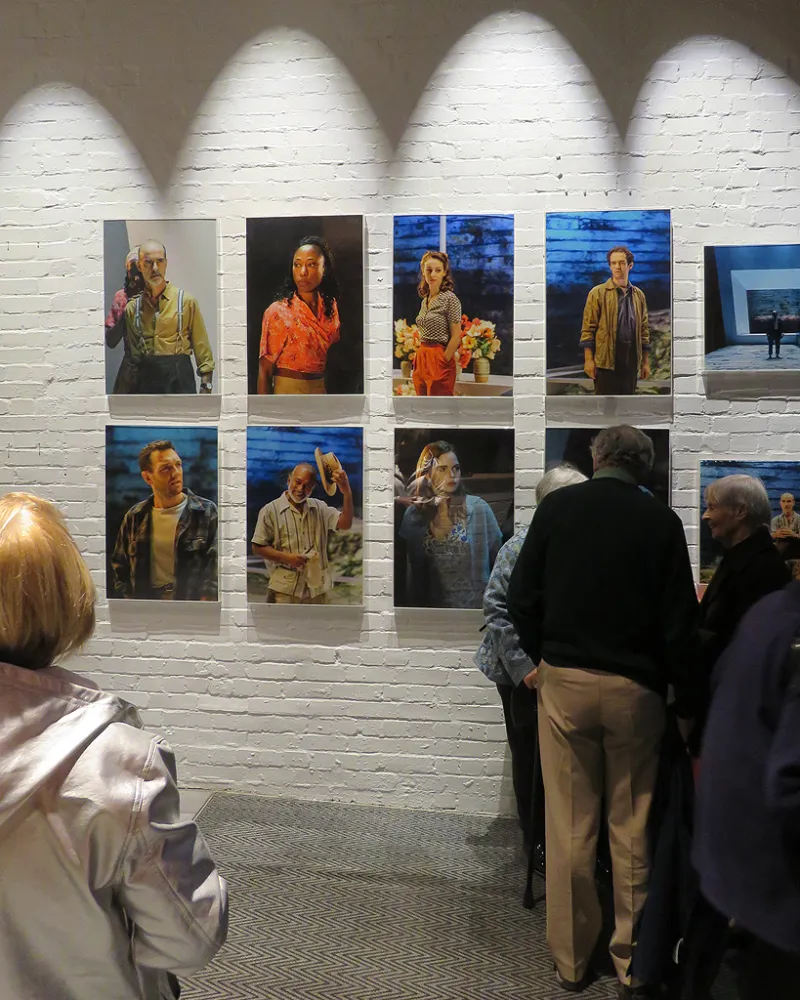
Photo: John Sutton , CC BY-SA 2.0, via Wikimedia Commons
There is a moment, roughly ninety seconds after the curtain falls for the interval, when a British theatre foyer becomes the most interesting room in town. Nobody has quite decided where to stand. Someone is already at the bar. Someone else is pretending they don't want a drink while scanning for the shortest queue. And somewhere near the fire doors, a volunteer usher in a lanyard is having the night of their life trying to herd forty people towards a table selling raffle tickets.
I spent most of this year's autumn doing nothing more glamorous than loitering in those rooms. Crumbling civic playhouses, a converted church hall with a suspiciously bouncy floor, one proper old rep with gold cherubs on the ceiling and a bar that only took cash. I bought a lot of warm white wine and a lot of those little tubs of ice cream you eat with a wooden paddle that always tastes faintly of the box. And I came away convinced of something I wasn't expecting: the interval is not the pause in the show. It's the second show. Often the better one.
The Choreography of the Queue
Watch a British audience at the interval and you'll see a social ballet. There's the forward scout — usually one half of a couple — sent to secure a position at the bar while the other half guards the coats. There's the person who has read the programme cover to cover and now wants to tell you the lead actor was in Casualty in 2009. There's the quiet negotiation over whether there's time for a wee before the second half, conducted entirely through eyebrow raises.
In one West Country playhouse, the bar had exactly one member of staff and a card machine that had clearly been through something. The queue stretched past a display case of old props and into a corridor. Nobody complained. A man near the front started taking orders from strangers behind him like a maître d'. By the time he reached the till he was carrying four gin and tonics, a lemonade and a packet of crisps, and had made two new friends. That is not customer service. That is civic improvisation.
Ice Cream, Raffle Tickets and the Volunteer Economy
Every theatre I visited had its own tiny economy running in the interval. The church hall was the purest version: a trestle table, a kettle, a tin of biscuits, and a raffle with a first prize of a hamper that looked like it had been assembled from the back of somebody's cupboard. The tickets were 50p a strip. I bought three and won nothing, twice.
But the raffle wasn't really the point. The point was the woman selling them, who had been doing it for eleven years and knew everyone's grandchildren by name. She told me the raffle funds the Christmas panto's fake snow. Last year's snow, she said, was "a bit too glittery". This is the level of cultural criticism you get in a church hall interval, and honestly it's more useful than most reviews.
The ice cream tubs deserve their own paragraph. They are, I think, the last great British theatrical ritual. You queue for them, you pay cash, you wrestle with the little wooden spade, and you eat them standing up while pretending you're not worried about dropping a bit on the carpet. I saw a grown man in a suit eat a strawberry one in four bites and then use the paddle as a bookmark. Respect.
Overheard in the Foyer
I kept a notebook of things I overheard, because I am that person. A selection:
- "I told you he was the one who did it. I told you at the car."
- "Is there a second half, or is that it?"
- "She's very good, but she's no Angela from the Post Office."
- "We've got the raffle at half nine, so don't wander."
- "This is much better than the telly, and you can't pause it."
That last one stuck with me. There's a real affection in the way local audiences talk about a night at the theatre. It's not reverent. It's familiar. People come because it's their theatre, their church hall, their mate's daughter in the chorus. The interval is when that ownership gets expressed. You don't stand in a cinema foyer at half time and discuss the plot with strangers. You do at the Palace, or the Hippodrome, or whatever your town's old place is called.
The Best Behaviour of a Town
There's something else the interval does. It puts a whole town on its best behaviour for twenty minutes. People hold doors. They let the older lady go first. They share the last of the milk. They help a stranger find the accessible loo. It's not fake — it's just that a theatre foyer at half time has an unspoken rule: we are all in this together, and the second half starts when the bell goes.
And that bell. The bell is the great equaliser. It rings, everyone groans, everybody downs their drink, and the whole room shuffles back through the double doors to their seats. For a moment, the foyer looks like the aftermath of a very polite party. Glasses everywhere. A stray programme on a chair. Somebody's cardigan.
Why It Matters More Than We Admit
I went into this month expecting to write something gently amusing about warm wine and raffle tickets. I came out of it thinking about how few places we have left where strangers of different ages sit in the same room and take a shared break. Not a screen break. A proper interval, with a queue and a bell and a woman selling tickets for the fake snow fund.
Local theatres are struggling — that's not news, and I'm not going to pretend a month of loitering solves anything. But the foyers tell you something the box office numbers can't. They tell you people still want to be together in a room. They still want the raffle, the ice cream, the overheard plot theories. They still want to be told, gently, that the second half is about to start.
So next time you're at your local theatre, don't rush back to your seat. Stay out in the foyer a bit. Buy a raffle ticket you won't win. Listen to the woman behind you who has completely misunderstood the plot. The play will be there when you get back. The interval, on the other hand, is its own little masterpiece — and it's only on for twenty minutes.