The Doorstep Depot: A Month as My Street’s Unpaid Parcel Desk
It started with a note through the door. 'Hi Rich, Evri says they’ll try again tomorrow but I’m at work. Could they leave it with you?' I said yes. Within a week my front door had become a branch of something. Not Royal Mail exactly. More a pop-up parcel office with a wonky doorbell and no opening hours.
I kept a log. Not because I’m organised, but because I’m nosy. A small notebook by the kettle: date, time, courier, house number, item shape, whether the neighbour said thanks or just took it and walked off. Over four weeks the log filled up: 34 parcels, 18 neighbours, six couriers, two misdeliveries, one box of cat food, one very large plant and a bottle of wine.
The 7pm doorbell is a different kind of knock
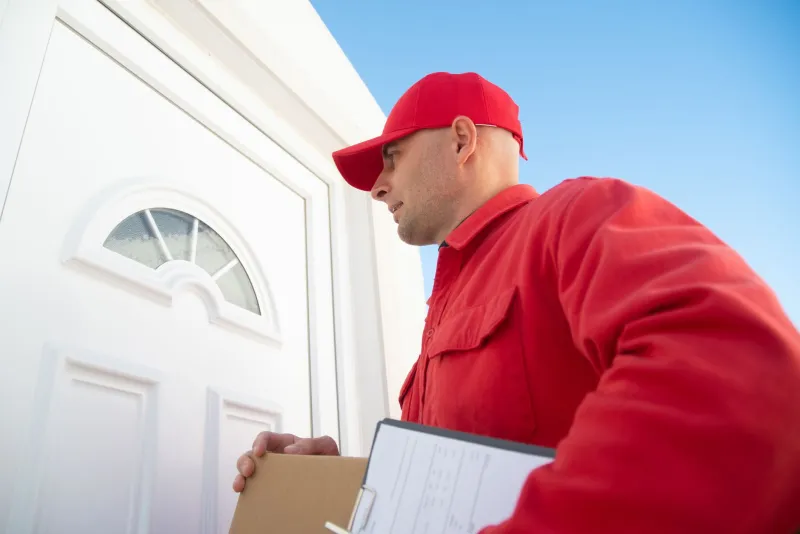
Most knocks came between 5pm and 8pm. The 7pm doorbell is not a social call. It has a clipboard energy. A courier says 'parcel for number 14' and is already walking away. I sign, say thanks, and stand in the hallway holding someone else’s life: a phone case, a birthday present, a pair of trainers. The doorstep becomes a handover desk.
The doorbell used to be for friends, the takeaway, maybe a neighbour needing sugar. Now it is an interface. Delivery apps have turned front doors into service points. The language is telling: 'safe place', 'left with neighbour', 'proof of delivery'. Trust is built into the system as a tick box. But someone has to be the neighbour.
What the couriers actually see
Couriers are under pressure. I started to recognise the same faces. One DPD driver began calling me 'the depot'. I told him I prefer 'satellite office'. He laughed, then asked if I’d take one for No. 9 because the gate was locked. I did. The log says: 'No. 9, medium box, gate locked, driver in a hurry'.
What struck me was how much couriers rely on informal networks. They know which houses answer, which dogs are loud, which porches are safe. In a month I became a node in that network. Not because I’m special. Because I was home and said yes. That’s it. The infrastructure of neighbourliness is often just availability.
The etiquette of the handover
There’s an unspoken script. The neighbour knocks. You open the door with the parcel already in hand, because you’ve been expecting them. They say 'sorry to bother you' even though you agreed. You say 'no bother at all' even if you were in the bath. They ask if it was okay. You say yes. They offer to take yours next time. You both pretend this is a fair exchange and not a one-way favour.
The best handovers took ten seconds. The worst took twenty minutes. One neighbour wanted to explain the entire returns saga. Another asked if I’d signed for a 'small envelope' that turned out to be a box of protein bars. There was an awkward moment when a courier left a parcel for No. 21 with me, then No. 21 insisted it wasn’t theirs. It sat in my hallway for three days like a hostage.
The awkward bits
Not everything was wholesome. I had to chase people. I had parcels for neighbours who went away for half-term and didn’t tell me. I had one courier leave a box behind my bin without knocking, then mark it 'left with neighbour' — me. I hadn’t agreed to that. The app said 'delivered to neighbour' and I felt oddly accused of something I hadn’t done.
There’s a privacy question too. You learn things from parcels. Pharmacy bags. Diet meal boxes. A very obvious birthday present. I didn’t want to know. I started turning labels face down. The doorstep is a small theatre of information, and being the parcel person means being briefly trusted with the props.
Why it works, mostly
The month taught me that trust is not a grand gesture. It’s a series of tiny, low-stakes transactions. 'I’ll take that in.' 'I’ll knock when I’m back.' 'No, don’t worry about the bin.' The street didn’t become a commune. Nobody started a WhatsApp group. But people nodded more. One neighbour brought a cake. Another fixed my gate. By the end, the doorbell felt less like an intrusion and more like a switchboard.
And there’s a practical upside. I got to know who was home during the day, who works shifts, who has a dog that sounds like a foghorn. That’s useful. Not in a surveillance way. In a 'borrow a ladder' way. The parcel desk was a reason to talk.
The small print of neighbourliness
Would I do it again? Yes, with boundaries. I’m not running a 24-hour depot. I don’t sign for anything that needs ID, and I don’t take parcels for the house that never says hello. The point isn’t to be the street’s unpaid concierge. It’s to be a reliable pair of hands when someone’s day goes sideways.
The 7pm doorbell will keep ringing. Couriers will keep leaving cards. Apps will keep asking us to choose a safe place. But the best safe place isn’t behind the bin or in the porch. It’s a neighbour who’s in and doesn’t mind. That’s not a tech solution. It’s just people.
By November, my notebook had 34 entries and a coffee ring on the cover. I’ve retired the log. The doorbell still rings. I still answer. Most of the time.