The Red Box Has a New Job: A Month of Books, Defibrillators and Flat Whites
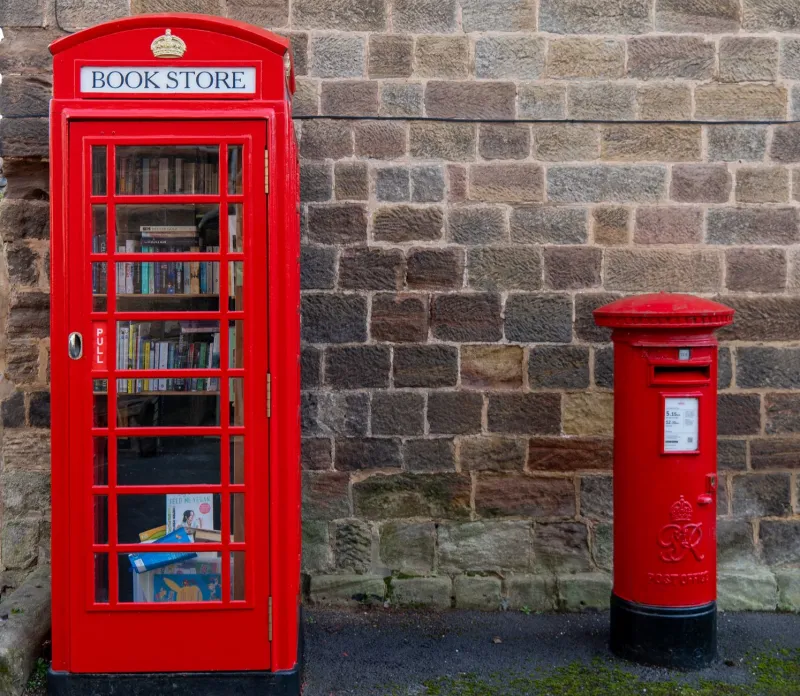
On a wet Tuesday in October, I stood in front of a red K6 telephone box in a village just outside Oxford and tried to make a call. There was no dial tone. There was, however, a laminated sign: 'Books in, books out. Please keep dry.' Inside, forty-odd paperbacks, a biscuit tin for 50p pieces, and a guestbook. I signed it. Somebody had written: 'Best selection of crime in the county.'
That set the tone for the month. I visited repurposed phone boxes across the country — a book exchange, a defibrillator housing, a tiny art gallery, a coffee stand — and came away with a notebook full of volunteers' phone numbers and a slightly inconvenient optimism about local life.
Two square metres, four jobs
The red K6 is a design classic — Giles Gilbert Scott's 1935 kiosk, all domed roof and tiny panes — but its second act is less glamorous and more interesting. Since BT's Adopt a Kiosk scheme began in 2008, thousands of communities have taken on boxes for £1 and turned them into whatever the village actually needs. The results are not grand civic statements. They are small, improvised, and stubbornly useful.
In a Peak District village, the box is a book exchange. In a coastal town in Pembrokeshire, it houses a defibrillator. In a market town in Fife, it is a one-person art gallery. And on the edge of a commuter town in Surrey, it sells flat whites through a hatch.
None of these are phone boxes any more. All of them are still in service.
The book box: 'a conversation with a lid'
Margaret, 68, a retired teacher, looks after the Oxfordshire book box. She checks it most mornings, wipes the condensation, removes the Mills & Boon that nobody wants, and restocks the Lee Child that everybody does.
'It's not a library,' she told me, slightly firmly. 'It's a conversation with a lid. People put in what they've finished, take out what they fancy, and sometimes leave a note. We had a whole summer of people recommending each other's books. It got quite heated over the Booker list.'
She reckons the box gets fifteen to twenty visits a week, more in summer, fewer in February. The upkeep is minimal but real: damp, spiders, the occasional bag of rubbish, a lock that freezes. 'The thing people don't realise,' she said, 'is that it's the only place in the village you can go at seven in the morning and not be asked to join the parish council.'
The defib box: the four minutes before the ambulance
Dev, 41, an IT project manager in a commuter village, adopted his box after a neighbour had a cardiac arrest. The defibrillator lives in a heated cabinet inside the kiosk; the code is given by the ambulance service when someone calls 999.
'The box is the easy bit,' Dev said. 'The hard bit is the four minutes before the ambulance arrives. This is not nostalgia. It's a piece of medical equipment with a red coat on.'
He checks the pads and battery monthly, logs it, and has trained half the street on CPR. Vandalism has been rare. Condensation is a bigger enemy. The box needs power, a working lock, and a clear path. 'If it's not accessible at three in the morning,' he said, 'it's just a museum piece.'
That line stayed with me. A red box is only as good as its worst Tuesday night.
The gallery and the coffee hatch
In Fife, Sue turned a box into a one-room gallery. The opening night drew six people and a flask. The exhibition changes monthly: local photographs, pressed flowers, a small but ambitious display of painted pebbles. There is a battery fairy light and a tiny plinth. 'It's not the Tate,' Sue said. 'But it's ours, and it's open at all hours, and nobody has to buy anything.'
In Surrey, Tom, 29, serves coffee from a box outside a station car park. He has a generator, a hygiene certificate, and a queue of regulars at 7.20am. 'It's a hatch, not a café,' he said. 'People like a hatch. You get your coffee, you say good morning, you go. It's the most social eight seconds of the commute.'
The maintenance ledger
Over the month, a pattern emerged. The boxes that work have three things: a volunteer who checks them, a small budget for repairs, and a clear purpose that the village actually needs. The ones that fail tend to have a lovely idea and nobody to sweep the leaves out of the doorway.
Common problems: damp, rust, broken glass, stiff locks, rubbish, and insurance. Power is a surprising headache for defib boxes and coffee stands. Accessibility is another — original kiosks have a step, and a narrow door. Volunteers spend anywhere from one to three hours a week on upkeep. That is not nothing. That is a Margaret.
There is also a risk of mistaking goodwill for infrastructure. A book box is not a library service. A defib box is not an ambulance. A coffee hatch is not a high street. They work best when they are small, specific, and supported — not when they are asked to plug a gap left by something bigger.
What the boxes get right
They are hyperlocal. They are legible. Everyone knows what a red phone box is, even when it is doing something else. They have almost no overheads, they sit on the village's mental map, and they give people permission to do something small without a committee, a grant application, and a three-year strategy.
They also create a strange kind of trust. The book box runs on honesty. The defib box runs on competence. The gallery runs on curiosity. The coffee hatch runs on a man remembering how you take it. Those are not trivial things.
My verdict
Charming relics? The object is nostalgic, yes. But the use is not. A defibrillator in a phone box is not a heritage exhibit. A book exchange is a micro-library. A coffee stand is micro-enterprise. A gallery is a place to stop.
Are they a genuinely workable model for community life? For specific jobs, yes — with caveats. They need volunteers, maintenance, and a bit of council or charity support. They will not replace libraries, post offices, or paramedics. But they are proof that a community can keep a useful thing standing, and that small institutions can be real institutions. The phone may be gone, but the line is still open.
I left the Oxfordshire box with a Lee Child, a flat white from a different box, and a guestbook entry of my own. It felt like a fair exchange.