Screwdrivers, Kettles and the Village Hall That Fights Back
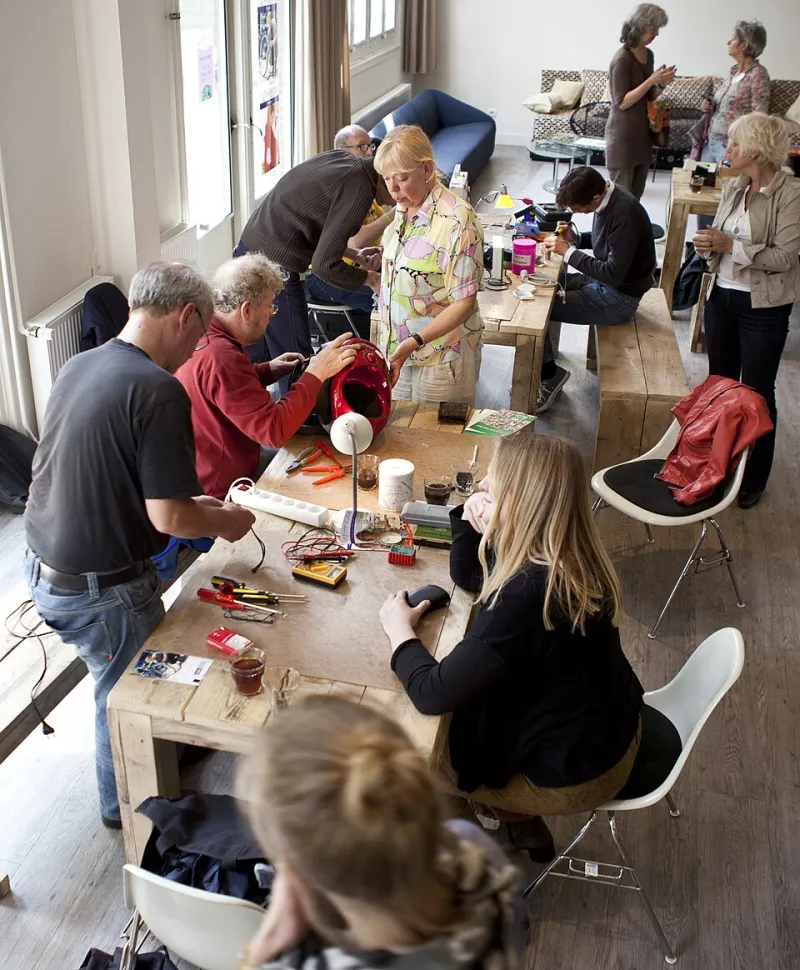
Photo: Ilvy Njiokiktjien, CC BY-SA 3.0, via Wikimedia Commons
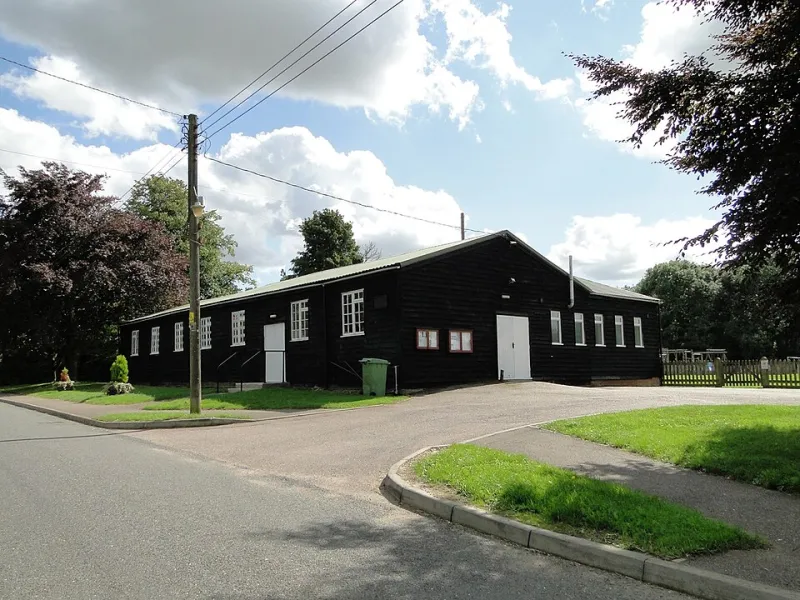
The village hall smelled of tea, dust and hot plastic. On the table in front of me: four kettles, a lamp with a frayed flex, a sewing machine that had not sewn since the Queen’s jubilee, and a queue of people holding broken things like they were bringing patients to a very informal hospital.
This was my local repair café, a monthly gathering where volunteers try to fix what the rest of us would usually throw away. I had come for a month of Saturdays — part observer, part clumsy apprentice — to find out what actually happens when a community decides to take ‘make do and mend’ literally.
The table of broken things
Within ten minutes I had been handed a screwdriver and told to hold a torch. The volunteer beside me, a retired engineer called Martin, was examining a kettle that tripped the fuse box whenever it was switched on. He did not look at the kettle so much as listen to it.
‘Right,’ he said. ‘First rule: we do not poke anything mains-powered unless we know what we are doing. Second rule: the fault is usually boring.’
He was right. The kettle had a worn flex. Not a dramatic fault, just a small failure that would have sent a perfectly serviceable appliance to the tip. Martin showed me how to check for damage, how to isolate the problem and why some repairs are a firm no for insurance reasons. The repair café is not a daredevil operation; it is organised caution with biscuits.
Across the room, a seamstress named Pauline was hemming a pair of trousers. A teenager was learning to use a multimeter on a radio. A man was patiently explaining to a woman that her toaster was probably fine, but her socket was not. Nobody was in a rush. The urn bubbled. The biscuit tin did the rounds.
My first repair: a kettle, a fuse and a lesson in humility
By my second visit I had been promoted from torch-holder to screwdriver-operator. Under supervision, I removed the base of a kettle and inspected the connections. I felt absurdly proud. I also felt mildly terrified that I would put it back together and create a small domestic explosion.
The fix took twenty minutes. The conversation took forty. I learned that Martin had spent thirty years in telecoms, that Pauline had taught herself to sew during a long spell off work, and that the teenager with the multimeter was called Sam and had come because he wanted to know how the inside of things worked. Nobody was being paid. Everyone was being useful.
That, I think, is the quiet magic of the repair café. It is not a shop. It is not a charity exactly. It is a room where competence is shared without a lecture, and where asking a stupid question is the expected entry fee.
The social life of a screwdriver
By the third week I had stopped pretending I was there only to write about it. I brought a lamp from my spare room that flickered every time the fridge kicked in. I brought a shirt with a loose button. I brought a small radio that had belonged to my grandad and had not made a sound since I dropped it moving house.
That radio was the moment it clicked. Martin could not promise to fix it. The parts were old, the casing was fragile and the fault was not obvious. But he spent twenty minutes looking at it anyway, and two other volunteers came over to offer opinions. It was not really about the radio. It was about the fact that someone had cared enough to bring it, and someone else had cared enough to look.
The repair café is full of these small histories. A child’s toy with a snapped wheel. A coat that needs a new zip. A kettle that belonged to a mum who has since died. The volunteers are not therapists, but they understand that objects carry weight. Throwing something away is sometimes throwing away a story.
The throwaway habit and the right-to-repair conversation
It would be easy to turn a repair café into a sermon about landfill. The volunteers are too practical for that. They will tell you, cheerfully, that some things are not worth fixing. Cheap plastic items can be more glue than product. Some electronics are sealed with proprietary screws and glued shut. Some manufacturers make it cheaper to replace than repair.
That is where the right-to-repair conversation gets real. In the UK we have rules designed to make certain appliances easier to mend, but the shop floor tells a messier story. Parts are hard to find. Manuals are guarded. A router can be obsolete before the kettle has boiled. The repair café is not a policy solution; it is a sticking plaster with a very good biscuit selection.
Still, the environmental argument is hard to miss. Every kettle saved is a kettle not in a skip. Every hemmed pair of trousers is a small vote against fast fashion. The volunteers do not lecture about this. They just keep fixing, and the pile of dead things on the table keeps getting smaller.
What I brought home
At the end of my month, I brought home a working lamp, a mended shirt and a small tin of screws I had been given by Martin with the words: ‘You will need these eventually.’
The lamp works. The shirt is fine. The radio still does not. But I have started looking at broken things differently. Before I bin something, I now ask a simple question: could someone on a village hall table have a go at this?
That is not a grand philosophy. It is just a shift in habit. The repair café has made mending feel normal, social and slightly less intimidating. It has also made me realise that community is not built only in big gestures. Sometimes it is built in a room with a screwdriver, a kettle and a urn that never quite stops boiling.