Pasting Tables and Pocket Change: A Month at the Car Boot Sale
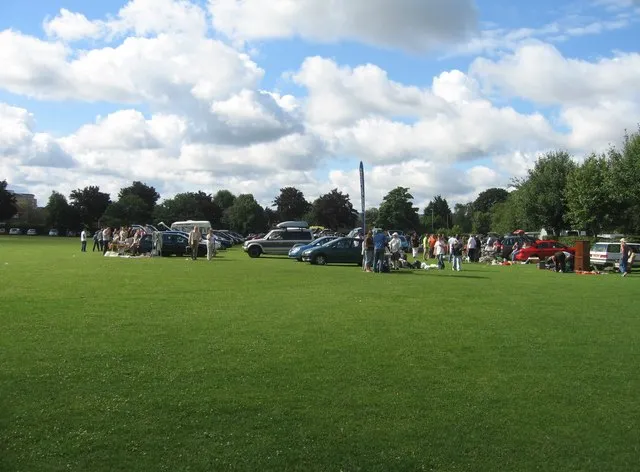
Photo: Sebastian Ballard, CC BY-SA 2.0, via Wikimedia Commons
The first thing I learned about the Sunday car boot sale is that it does not begin when the gates open. It begins at 6.40am, in the queue, when a man in a fleece examines another man's trailer and says, 'You've got a lot of CD racks this week.' That is not small talk. That is the opening scene.
For four Sundays in October I treated my local car boot sale as a proper field experiment. I paid my entry, brought a thermos, left the phone in my pocket and watched. The brief was simple: treat the place as television. Not because it is tacky, but because it is unscripted in a way almost nothing else in 2026 is. No algorithm chose the cast. No one pre-booked a slot. The plot was decided by a pasting table, a box of spanners and the weather.
The 6.40am Audit
Sellers arrive early. Buyers arrive earlier. There is a strange hierarchy to it. The serious lot walk fast, scan tables from three paces away and ask one question — 'Have you got any tools?' — before you have finished unfolding your chair. The rest of us drift, pick things up, put them down and pretend we are not calculating whether a second-hand toastie maker counts as a need.
The entry fee is still one of Britain's great bargains. A couple of pounds to wander a field for three hours, talk to strangers and come home with a lamp you did not know you wanted. In an age of £18 cinema tickets and timed slots for everything, that feels almost radical.
The Regulars Have Names (and Alliances)
By week two, I had a mental cast list. There was Dave, who sells tools and tells you every item is 'a good little worker'. There was Mandy, whose table is an avalanche of DVDs, CDs and one unexplained box of remote controls. There was the man who arrives with a single lamp and a suitcase of cables, like a travelling electrician with a sideline in mystery.
The regulars know each other. They save things. They say, 'I thought you'd want this,' and hand over a book about canals or a tin of buttons. It is a social network with mud on its boots. You do not need a login. You need a fiver and the ability to say 'morning' without meaning it too aggressively.
The Unwritten Rulebook
Car boot sales run on laws that no one has written down and everyone enforces. Do not haggle before the seller has set up. Do not stand in front of a table discussing a price while someone behind you is trying to see. If it is already a pound, pay the pound. If you are going to say 'I'll give you...', do it with a smile and a reason, not a threat.
The haggling itself is a ritual. The seller says a price. The buyer makes a face like they have been asked to fund a small war. Then comes the counter-offer, the pause, the shrug. Sometimes the deal happens. Sometimes it does not. Either way, both sides get to perform. That is the point. It is theatre with pocket change.
The Find of the Month
I bought a framed photograph of a dog I have never met. It cost £1.50. The seller said, 'He's not ours, but he looks happy.' I also bought a working 1980s sandwich toaster, a Haynes manual for a car I do not own and a box of birthday cards with the names already written in. None of it was on a list. All of it came with a story. That is the difference between shopping and browsing.
The bizarre finds are not the whole appeal, but they are the proof. A car boot sale is one of the last places where you can be surprised by an object. Streaming gives you a menu. A field gives you a unicycle and a woman explaining why she bought it in 1998.
Why It Still Matters in 2026
It would be easy to be sentimental about this. I am not. Car boot sales can be cold, muddy and full of tat. Some sellers are grumpy. Some buyers are worse. But the format works because it is cheap, social and gloriously uncurated. You turn up. You see who is there. You make it up as you go.
In 2026, so much of our leisure is designed to remove friction: pre-booked, pre-selected, pre-reviewed. The car boot sale does the opposite. It gives you friction and calls it Sunday. It is Britain's last great unscripted reality show, and the cast changes every week.
If we are serious about local life, we should treat these sales as civic infrastructure. Not just places to shift clutter, but places where people talk, swap, haggle and belong for a morning. The pasting table is doing more work than we admit.