The Fiver Night Out: In Defence of the Great British Village Hall
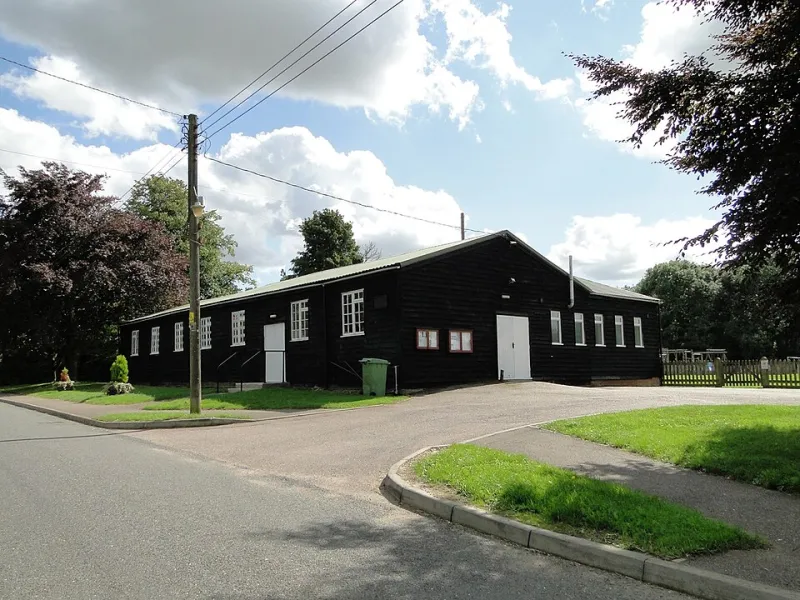
Photo: Adrian S Pye , CC BY-SA 2.0, via Wikimedia Commons
There's a particular smell to a village hall. Warm dust off the radiators, a hint of floor polish, and — if it's a good night — the ghost of a thousand teas from an urn that's been in service since the seventies.
I was in one a few weeks back, somewhere off a B-road with more hedgerow than streetlight. Forty-odd people on stacking chairs. A stage built out of pallets. A raffle where the top prize was a meat voucher and second prize was, wonderfully, another meat voucher. Ticket price: four pounds. Somebody's dad on the PA. Half a lager from a jug because the licence is a bit of a grey area and nobody wants to be the one who asks.
It was, hand on heart, one of the best evenings I've had this year. Not in a nostalgic, isn't-it-quaint way. Genuinely good. The band were tight, the room was warm, and everyone in it had chosen to be there rather than been funnelled in by a booking fee.
The maths of a small night out
Let's do the boring bit first, because it matters. A night at a big arena these days is not an evening out, it's a financial commitment. Ticket, booking fee, service fee, venue levy, the train, the £9 pint in a plastic cup, the inevitable taxi because the last service back was at 22:14. You can write off eighty quid before you've seen a support act.
A village hall night is a fiver, and the tea is free if you're early. That's not a small difference, it's a different category of thing. It means you can go on a whim. It means you can take the kids, or your nan, or both. It means you can go and not love it and not feel robbed.
And affordability isn't a consolation prize — it's the whole point. When a night out costs less than a takeaway, people take risks on it. They turn up for a folk trio they've never heard of, or a talk about bats, or a ceilidh where nobody knows the steps. That willingness to risk a fiver is what makes a local culture scene actually function.
Why the small rooms suddenly feel like the interesting ones
There's a wider thing happening here, and I don't think it's just me getting sentimental.
Grassroots music venues have been closing at a depressing rate for years. Pubs are shutting, or getting converted into flats with a heritage plaque where the bar used to be. At the same time, the cost of putting on anything has gone up, which pushes the surviving mid-size venues towards safe bookings — tribute acts, comedy you've already seen on telly, the same touring shows on rotation.
Into that gap has walked the parish council and the volunteer committee. Village halls, church rooms, community centres, the back room of a working men's club, the sports pavilion with the squeaky parquet. They're not trying to compete with the O2. They're doing something the O2 can't do: a night that belongs to the people in the room.
I've seen film nights where the audience votes on what's shown. I've seen a monthly record night where the bloke running it brings his own decks and a box of singles and takes requests scrawled on beer mats. I've seen a repair café, a book swap, a ukulele orchestra, and a talk on medieval field systems that packed the place out on a Tuesday. None of it was slick. All of it was alive.
The people doing the work
Here's the bit that doesn't get said enough: almost none of this happens without someone quietly doing admin in their kitchen.
You know the sort. The retired teacher who books the hall, chases the insurance, prints the posters, and stands at the door with a tin. The person who runs the Facebook page and the WhatsApp group and still puts a laminated sign on the gate post because half the village isn't online. The one who does the risk assessment and the one who does the tea and the one who stays behind to stack the chairs.
These people are running a small arts venue out of their spare time, for free, and we treat them like the weather. We shouldn't. If you go to one of these nights and enjoy it, the single most useful thing you can do is offer to help with the next one — or at the very least put a fiver in the raffle and say thank you on the way out.
What the fancy venues could learn
A few things, honestly.
Nobody minds a slightly wonky evening. The lighting was done with a desk lamp and a bit of gel. It was fine. Charm beats polish more often than the industry likes to admit.
Cheap tickets bring in people who wouldn't otherwise come. Price is not a filter for quality; it's a filter for curiosity. Lower the barrier and the room fills with humans rather than regulars.
The interval is the point. Half the reason to be there is the bit where you stand by the tea urn and find out that the woman next to you runs a beekeeping course and the bloke in the corner used to tour with a band you've actually heard of. You cannot stream that.
One thing I'd change
Accessibility, mostly. Plenty of these halls are lovely and also have a step at the entrance, a loo that isn't wheelchair-friendly, and a loop system that exists in the minutes but not in reality. If a community building is going to be the heart of local culture again, it needs to be a heart everyone can get into. That's a funding argument as much as a volunteer one, and it's worth making loudly.
Go and sit on a plastic chair
I'm not going to pretend every village hall night is a triumph. Some of them are badly advertised, freezing cold, and over by half nine. But the hit rate is far better than it has any right to be, and the misses cost you four quid and an hour of your life.
So here's my small campaign for the year: find your nearest hall, community centre or church room, and go to whatever's on. Not as a novelty. As a habit.
Take a jumper. Take cash for the raffle. Say yes to the tea.