The Quizmaster's Alibi: Running a Pub Night That Phones Can't Win
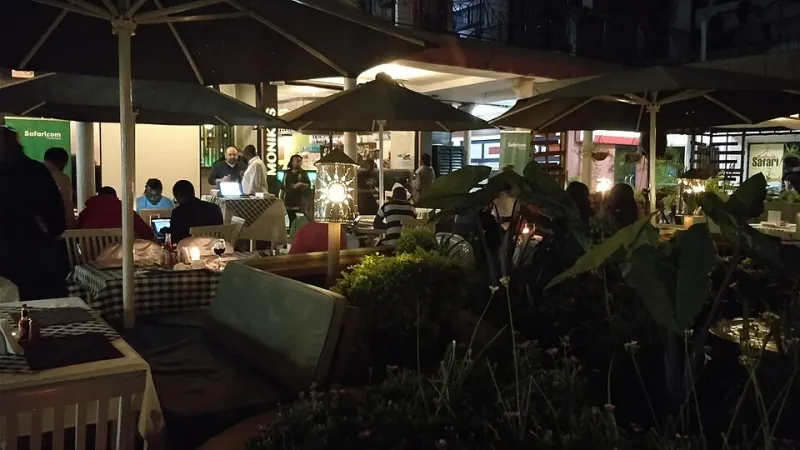
Photo: Hilary Murugu, CC BY-SA 4.0, via Wikimedia Commons
There's a moment, about forty minutes into a pub quiz, when the room goes quiet in the wrong way. Not the good quiet of people thinking. The bad quiet of four adults staring at a phone under the table while one of them whispers, 'No, the other one — the bloke from that thing.' I've been on both sides of that table. I've cheated at a quiz I was hosting. I've also been the quizmaster who wrote a question so obscure that the winning team got it by guessing 'Basingstoke'. Neither is the point.
The point is that the pub quiz is thriving again in 2026, and not because pubs have suddenly become classrooms. It's because people are desperate for a night out that doesn't involve a subscription, a screen or a group chat. A good quiz gives a room a shared task. It gives strangers a reason to lean over and say, 'Was it a Labrador?' It gives the landlord a Tuesday. But it only works if you design it for the people in the room, not for the search engine in their pocket.
The smartphone problem isn't technology — it's question design
Banning phones is tempting, and slightly pointless. You can put a box by the door, but someone will keep theirs in a coat pocket and disappear to the loo for six minutes. The better move is to write questions that make Googling feel silly. A question with one factual answer — 'What year did the first Tesco open?' — is a lookup. A question with a story attached — 'Which supermarket chain did the first UK loyalty card scheme, and what was it called?' — is a conversation. People still might Google it, but they'll have to admit they've done it, and the room will judge them.
I like rounds that reward memory rather than speed. Local knowledge is the obvious one: the name of the road behind the church, the pub that used to be a butcher's, the bus route that no longer runs. But you can do the same with telly, music and sport. Ask for the theme tune, not the year. Ask for the actor, not the episode. Ask for the thing everyone in the room has half-forgotten and will be delighted to remember.
Build rounds around memory, not lookup
A quiz night needs shape. Four rounds is usually enough: one general knowledge, one local, one picture or music round, and one wildcard. The wildcard is where you put the question that makes people laugh — the one about the worst Christmas number one, the most ridiculous British holiday camp mascot, the name of the dog from the advert. Keep the scoring simple: ten points a round, a bonus point for a team name that makes the bar staff smile. Nobody wants to hear a twenty-minute explanation of why the answer is technically 'a type of heron'.
Question design is also about difficulty. If every team gets eight out of ten, the quiz is too easy. If the best team gets four, it's too hard. Aim for a spread: a couple of gimmes, a few that need two brains, and one absolute stinker that everyone argues about on the way home. That stinker should be funny, not cruel. There's a difference between 'Which poet was born in the same town as the pub?' and 'What was the middle name of the third drummer in a band you've never heard of?'
Pace it like a night out, not an exam
The biggest mistake I've made as a quizmaster is treating the quiz as the main event. It isn't. The main event is the night. The quiz is the scaffolding. That means you need gaps: time to order, time to argue, time to go to the bar and come back with a packet of crisps. If you read out twenty questions without a break, the room starts to feel like a detention hall. If you leave too long between rounds, people drift to their phones and the spell breaks.
My ideal rhythm is four rounds of ten questions, with a five-minute break after round two and a two-minute 'settle' before the final round. I read each question twice, slowly, and I never repeat it a third time just because one table shouts. That's not cruelty; it's structure. The tables that listen get rewarded. The tables that don't learn by round three.
Prizes: small, useful, slightly ridiculous
A pub quiz prize should feel like a joke that also happens to be useful. A round of drinks is fine, but it's boring. A bag of posh crisps, a pub voucher, a dreadful trophy from a charity shop, a certificate printed at home and signed by the landlord — all better. In 2026, when everyone is trying to spend less and go out more, the prize matters less than the ritual. The winning team wants to be acknowledged. The losing team wants to be mocked gently. The middle team wants to feel that they were one good guess away.
I'd also add a wooden spoon prize: something small and silly for the team that came last. It keeps the room friendly. It tells people that the quiz isn't a court of law. And it gives the quizmaster a chance to say, 'You've won the right to choose the first song on the jukebox.' That's a better prize than a fiver.
Cheaters, landlines and the gentle art of the visible table
You cannot eliminate cheating. You can make it socially awkward. Seat teams so that the quizmaster can see most tables. Ask people to put phones face-down in the middle of the table — not confiscated, just visible. If a team is suspiciously fast on a question about the 1978 FA Cup, walk over and ask them to explain their answer. Not aggressively. Just curiously. 'Go on, how did you get that?' Most cheaters fold. The honest ones enjoy the chance to show off.
The other trick is to make the quiz a little bit live. Ask a question that requires someone in the room to know something — the name of the current landlord's dog, the year the pub was built, the best chip shop within walking distance. That kind of question can't be Googled, because the answer is in the room. It also makes the pub feel like a place rather than a venue.
Why the format still works
The pub quiz works because it is cheap, social and slightly competitive. It doesn't need a big screen or a celebrity host. It needs a room, a microphone that half-works, and someone willing to stand up and say, 'Right, question one.' In 2026, that's a rare thing: a night out that asks you to be present, to listen, to argue about something that doesn't matter. The smartphone can wait. The quiz is on.