Signed, Sealed, Delayed: Thirty Letters in a Month of Instant Everything
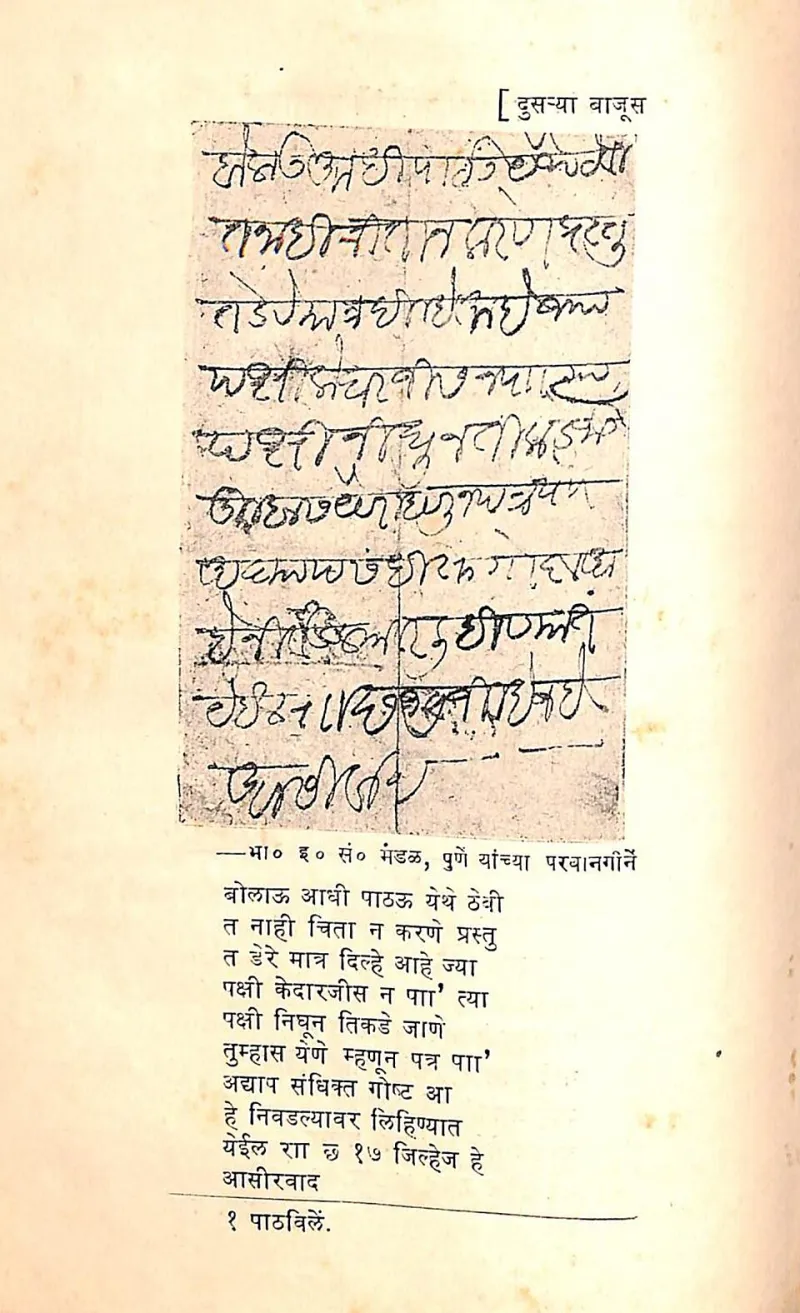
Photo: Madhavrao I, Public domain, via Wikimedia Commons
There's a sound a letter makes that no notification has ever managed to copy. Not the ping, not the buzz — the soft slap of an envelope landing on the mat, followed by that half-second where your brain tries to work out who on earth would spend money to talk to you.
I hadn't heard it properly in years. So I cleared a corner of the kitchen table, bought a pad of writing paper, and set myself a challenge: thirty letters, posted, over the course of a month. Actual paper. Actual ink. Actual postcodes.
The rules I set myself
One letter a day for thirty days. Handwritten, no printing things off and pretending. Posted in a pillar box rather than hand-delivered, unless the whole point was handing it over. And — the hardest one — no following up to check whether it had arrived.
I broke that last rule on day nine. More on which in a moment.
What the stationer said
I went to the independent stationer's on the high street first, the one that smells faintly of cardboard and sells birthday cards for every age up to a hundred. I asked for thirty envelopes and a pad of decent writing paper. The woman behind the counter looked at me the way you'd look at someone asking for a telegram.
"Wedding?" she said. "Or funeral?"
Neither, I told her. Just letters. She said she sells envelopes in threes and fours these days, mostly for cards, and that the only people who buy writing paper in any quantity are over seventy or under twelve. Then she sold me a pad with a lovely weight to it and a box of envelopes that turned out to be slightly too big for the paper, which is the sort of thing nobody warns you about.
Stamps came from the Post Office counter down the road: second class, because nothing I had to say was urgent and because the price of a first class stamp has become a running joke with a rather bleak punchline.
Thirty letters, and quite a lot of silence
The first week is easy. The first week is all enthusiasm and decent stationery and the pleasant sense of being the sort of person who writes letters.
The second week is harder, because the second week is when you realise how quickly you run out of things to say to people you mostly communicate with via reaction images and one-line texts. My letters got shorter. Then one got quite long, because I'd had a bad Tuesday and it turned out that writing about a bad Tuesday at length was far more useful than posting about it.
The replies came in slowly, then all at once. Of the thirty: nineteen came back as letters, which genuinely shocked me. Six were acknowledged by text, usually something along the lines of "got your letter, will reply properly at the weekend" (they did not). Three vanished entirely. Two produced a phone call, which is a whole different event when you were expecting nothing at all.
The pattern in who wrote back was so clear it was almost rude. The over-65s replied within days, in proper handwriting, with news of people I've never met. The under-25s replied with drawings and stickers and the kind of uninhibited nonsense that made me laugh out loud at the doormat. The middle group — thirty-somethings with jobs and children and a phone that never stops — meant well and mostly didn't manage it. I include myself in that group, so I'm not judging anybody.
The wait is the entire point
Here's what I hadn't expected: the not-knowing is the pleasure.
You post a letter and then you genuinely cannot check whether it's been read. No tick, no two blue ticks, no "seen 14:02". There's a red box, a slot, a day or two of nothing, and then either a reply on the mat or a small, low-grade disappointment that you've forgotten about by teatime.
That gap does something to what you write. Knowing a reply will take days, you stop writing for a reaction and start writing for the person. You explain more. You fill in the gaps. You tell the whole story instead of the punchline, because there's nobody to interrupt with "yeah, saw that online".
The letters that stayed with me
My gran wrote back four sides in biro, in handwriting that hasn't changed since the late seventies, and included a pressed leaf from her garden because she thought I'd like it. A friend I hadn't spoken to properly in six years replied with a two-page list of everything that had happened since, in order, which is a far better way of catching up than scrolling back through somebody's photos.
My nephew, who is seven, sent a drawing of a dinosaur wearing a hat. It is on the fridge. He is now the only person in Britain who writes to me, and I'm delighted about it.
Making it work in 2026: the practical bit
If you fancy a go, a few things worth knowing before you start.
Size matters more than you'd think
A standard letter is up to 24cm by 16.5cm by 0.5cm, and up to 100g. Anything bulkier — a card with a badge sellotaped inside, a small gift, a manuscript — tips into large letter territory, up to 35.3cm by 25cm by 2.5cm, and costs more. If it won't slide through a 5mm slot, assume large letter and budget accordingly. The kitchen scales are your friend.
Buy stamps from proper places
The old non-barcoded stamps stopped being valid back in 2023, so anything lurking at the back of a drawer is probably decorative now. Buy from a Post Office or from Royal Mail directly — the discount stamp trade online is full of fakes, and the person who gets stung is the recipient, who has to pay a surcharge to collect their own post.
Write the address properly
Full name, house number and street, town, and the postcode in capitals on its own line. The postcode does the heavy lifting; everything above it just confirms you're in the right area. Put your own address on the back, upper left of the reverse, so it finds its way home if it all goes wrong.
Write something specific, not the news
The trap is thinking a letter has to be a report. It doesn't. One good paragraph about one small thing beats a summary of your entire month. Answer a question they asked you two years ago. Tell them about the thing in your kitchen that's broken. Ask something you actually want an answer to, so there's something to reply to.
Post it somewhere with a collection plate
Every pillar box has a plate showing the last collection time, and in smaller villages that can be startlingly early in the day. Post offices will take it over the counter, and some will still hand-stamp it if you ask nicely. And if it's genuinely urgent, it isn't a letter, is it.
Would I do it again?
Yes — but thirty was too many. Twelve is the number. One a week for three months, so you're not scraping around for material by the middle of week three, and so there's still something to look forward to on the mat.
The other thing I'd say is that the letters that mattered weren't the long ones. They were the ones sent to people who don't get much post, which is most people, and the ones that turned up with no warning whatsoever.
Somebody at the sorting office is reading your postcode at seven in the morning and putting your envelope into the right frame. Thirty letters later, I've decided I'd quite like to keep being a link in that chain.