Marrows, Mugs and the Honesty Tin: Four Weeks Behind the Allotment Gate
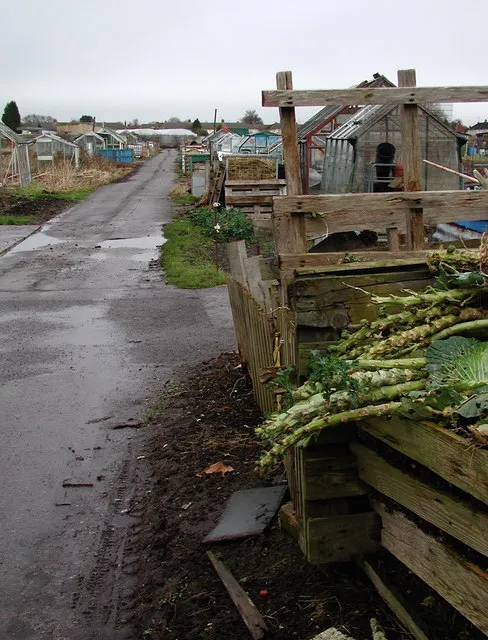
Photo: Paul Glazzard, CC BY-SA 2.0, via Wikimedia Commons
The first thing you learn on an allotment site in November is that the gate code is not really about security. It is about membership. Punch in the four digits, push the stiff metal gate, and you cross from a suburban pavement into a small, muddy country with its own weather, its own timetable and its own quietly enforced laws.
I spent four weeks on a council-run site on the edge of town, mostly loitering, occasionally weeding, and always trying to work out how a few dozen rented plots manage to run themselves with so little formal machinery. There is a committee, of course. There is a noticeboard, a water bill and a set of rules about bonfires. But the real system lives in the gaps between sheds: in the mugs left on hooks, the tomatoes in a washing-up bowl, the half-row of raspberry canes someone has dug up for anyone who wants them.
The Gate Code Is the First Test
On my first morning I stood for a full minute trying to look like a person who belonged. A man in a fleece and mud-caked boots appeared, said nothing, entered the code and held the gate open with his elbow. That was the whole induction. No clipboard, no lanyard, no welcome pack. Just a nod that meant: you are in, but you are also being watched, in the way that a village watches.
Within a day I had been told three times that the water is turned off in winter, twice that the skip is only for green waste, and once, with real feeling, that the people on plot 14 had not cut their hedge since the Queen died. I did not verify this. I did not need to. The hedge was already doing the talking.
Sheds Are Social Architecture
You can learn a lot about a person from their shed door. Some are padlocked and silent. Some are open, with a deckchair outside and a radio permanently tuned to a station that plays nothing but weather warnings and old songs. The best sheds have a spare kettle, a tin of biscuits and a chair that has been sat on by at least four different people that morning.
Shed etiquette is simple but strict. You do not walk into an open shed without saying hello. You do not sit in the chair unless invited, and you do not comment on the state of the shelf above the kettle. You accept tea in whatever mug is handed to you, even if it has a chip and a faded picture of a donkey. You rinse the mug. You put it back on the hook. That is the whole ceremony.
The Seed Swap Economy
By the second week I had been given a handful of broad bean seeds, a plastic tub of unknown seedlings and a lecture on why my imaginary brassicas would fail if I did not net them immediately. Nothing changed hands for money. The currency was information, surplus and favours to be called in later.
A woman on plot 22 ran what amounted to a seed library from a Tupperware box on her bench. Envelopes were labelled in biro: Kelvedon Wonder, 2024 — good germination, Mystery squash from Maurice, Do not plant near the shed. She did not advertise. People simply knew. If you asked nicely, you were allowed to take two packets and leave one. If you took three, you were talked about.
The Honesty Box and the Courgette Glut
At the entrance, a plastic table appears most weekends between June and October. In November it holds the last of the apples, a few late raspberries and a marrow so large it looks like a prop from a folk horror film. There is a tin with a slot cut into the lid. A sign says: Tomatoes 50p. Marrows free to a good home. Please shut the gate.
Nobody counts the money. That is the point. The tin is not a business model; it is a small daily vote of confidence in other people. On my third visit I watched a man take two apples, put in a pound, then spend five minutes trying to find someone to give him 50p change. He eventually left a note. The note said: IOU 50p — Dave, plot 9. I have no doubt the 50p arrived.
Hedge Lines and Quiet Feuds
The site has one ongoing conflict that has outlasted two committee chairs and a hosepipe ban. It concerns a hedge. One party says it is a windbreak and a wildlife corridor. The other party says it is encroaching on a path and stealing light from a row of winter cabbages. Letters have been sent. Measurements have been taken with a tape measure that looked older than the allotment itself. The hedge remains.
What interests me is how civil it all is. Nobody shouts. Nobody rants on a Facebook group. The disagreement is conducted through small, pointed acts: a neatly trimmed edge on one side, a pile of clippings left just slightly over the line, a comment at the water butt that is technically about the weather but is really about the hedge. It is passive-aggressive, yes, but it is also a form of maintenance. The hedge feud keeps people talking. Without it, they might have to discuss something harder, like the state of the communal path.
The Rota Is the Real Constitution
Watering in summer is the closest the site comes to a public service. Names go on a rota pinned to the noticeboard. Each person has a day. If you miss your day, someone will water for you, and then someone will mention it to you, and then you will feel a small, specific shame that no council fine could ever replicate.
In November the rota is mostly about tidying. Paths need clearing. Leaves need sweeping into the leaf-mould cage. The communal shed needs its gutters checked. None of this is paid work. All of it happens. The site runs because people do not want to be the one who lets the side down. That is not a rule; it is a culture. And cultures are harder to write down than rules, which is why the noticeboard has so many notes that begin with the word please.
What Four Weeks Taught Me
I left with muddy boots, a bag of leeks I had not grown and a strange affection for a community that communicates mostly through surplus produce and pointed hedge maintenance. The allotment is not a utopia. There are disputes, cliques and at least one person who will tell you exactly what you are doing wrong with your compost. But it is a working model of something we keep saying we have lost: trust between neighbours who do not share a front door, only a gate code.
If you want to understand a British community, do not read its minutes. Stand by the honesty tin for an hour. Watch who puts money in, who takes a marrow, who shuts the gate behind them. The ledger is not on paper. It is in the mugs, the seed envelopes and the quiet, constant business of not letting the side down.